If you are eyeing Wellington for your next equestrian property, you already know that the right setup can shape your entire season. Between daily trips to the showgrounds, arena footing that performs, and local rules that govern use, the details matter. This guide gives you a clear framework to compare properties, avoid red flags, and plan due diligence with confidence. Let’s dive in.
Why Wellington for equestrians
Wellington is a winter hub for elite equestrian sport, anchored by the Palm Beach International Equestrian Center and the International Polo Club. During season, trainers, veterinarians, farriers, and specialized vendors concentrate here, which supports serious competitors and dedicated amateurs. That same demand makes property choice strategic. Your land plan, barns, arenas, and access can make daily training and showing efficient or stressful.
Location and access
Proximity to the showgrounds is a top driver. For many competitors, a daily commute under 10 to 15 minutes is ideal, especially during peak-season traffic. Look closely at trailer access, the turning radius at the driveway, and where guests or clients will park. If you plan clinics or lessons, think about circulation and emergency access as well.
Land and layout checklist
Before you fall in love with a barn, confirm the land truly works for horses and vehicles.
- Confirm usable acreage vs. gross acreage, including how much is already fenced and turnout-ready.
- Walk the property after rain to check grading, drainage swales, and any standing water.
- Evaluate soil and compaction in paddocks and arena bases.
- Map trailer access, turning radius, and dedicated truck-and-trailer parking.
- Review FEMA flood map status and request any existing elevation certificates.
Decision point: Is the turnout acreage and drainage sufficient for your herd and program, or will you need immediate grading or drainage work?
Barn and stable essentials
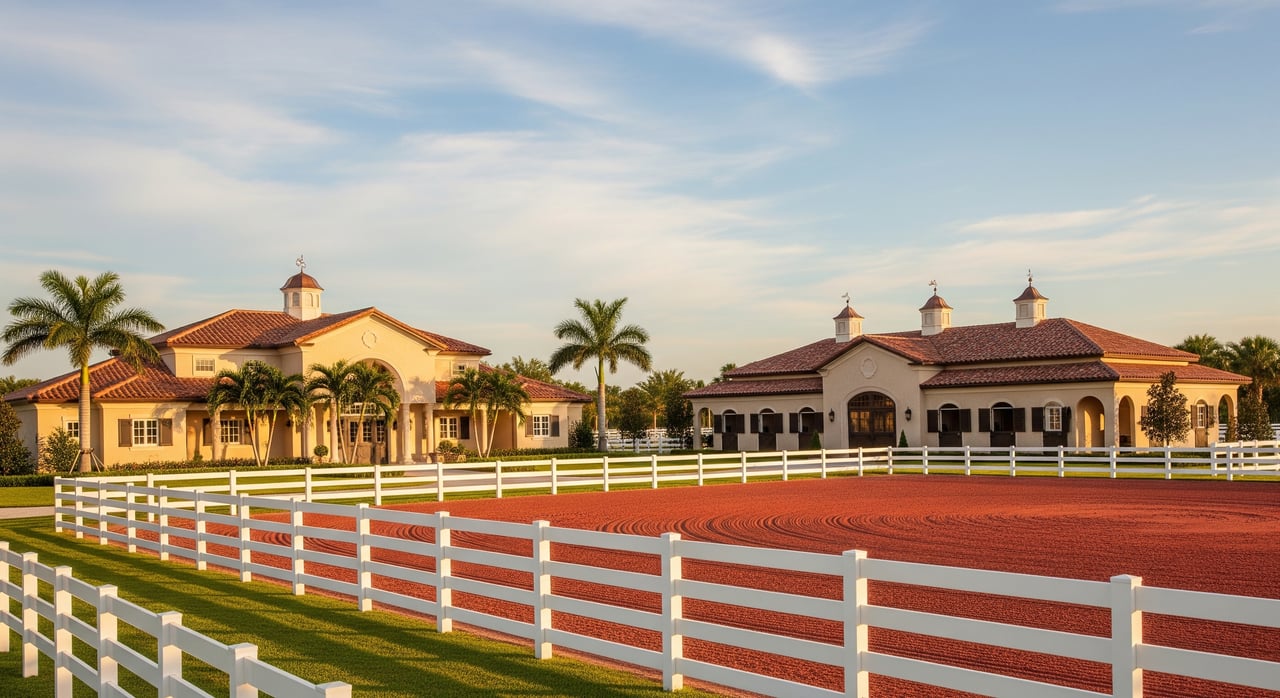
A safe, efficient barn underpins daily operations. Typical competition stalls are 12×12 feet, with some 12×14 feet for larger horses. Check aisle width, ventilation, and natural light for comfort and safety. Separate, secure feed and tack rooms help protect supplies and simplify routines.
Look closely at flooring and drainage in stalls and aisleways. Rubber matting over a compacted base or well-finished non-slip concrete supports hoof health and easy cleaning. Confirm hay storage capacity, hot and cold water in wash stalls, and laundry setups for blankets and pads.
If you operate at a high level, assess electrical capacity for lighting, hot walkers, solariums, and equipment, plus whether a generator is in place. Staff quarters, restrooms, and service areas can be essential for full-time care.
Barn checklist
- Stall count and dimensions; aisle width and ventilation features.
- Roof, gutters, electrical wiring, lighting, and panel capacity.
- Tack room, feed room, hay storage, wash and grooming areas with proper drainage.
- Non-slip surfaces, clear egress, and fire extinguishers.
- Permit status for all barn structures and additions.
Decision point: Does the barn already meet competition-level needs, or will you need upgrades and permitting to reach your standard?
Arenas and footing
Your arenas should match your discipline and training load. A standard competition dressage arena is 20 by 60 meters. Hunter and jumper programs typically need larger schooling areas and consistent, well-drained footing. Common footing blends include silica sand, sand-rubber mixes, and engineered additives; depth, base, drainage, and maintenance equipment matter more than brand names.
Consider irrigation or watering systems to control dust and maintain consistency. Quality lighting extends training hours and is helpful during season. For dressage, mirrors and letters support precise work; for jumpers, plan safe storage for rails and standards.
Arena checklist
- Size and layout of each arena, plus any warm-up spaces.
- Footing type, depth, base condition, and visible maintenance equipment.
- Irrigation or watering systems for dust control.
- Lighting levels and any mirrors, markers, or jump storage.
- Safe perimeter fencing and spectator or coaching areas.
Decision point: Will the arenas meet your schooling demands, or will you need resurfacing or expansion that could affect your training timeline and budget?
Water and drainage
South Florida’s high water table makes engineered drainage essential. Look for swales, retention areas, and graded paddocks that move water away from stalls and turnout. Ask about any permits related to stormwater management and whether the property uses an established manure handling or composting plan.
Flood risk and insurance should be part of your financial review. Check the property’s FEMA flood designation and whether an elevation certificate exists. Plan for hurricane season with secure barns, tie-downs where appropriate, and a generator strategy.
Operations and services
Wellington’s equestrian ecosystem offers robust support, including a local 24/7 equine hospital presence, farriers, feed and hay suppliers, and transport. Demand rises sharply in season, so confirm vendor capacity and delivery schedules. If you rely on experienced grooms, evaluate on-site housing or nearby rentals.
Utilities and operations checklist
- Water access and flow, well vs. municipal supply.
- Electrical service capacity and backup power.
- Manure management plan and pick-up schedules.
- Proximity and lead times for veterinarians, farriers, and feed suppliers.
Decision point: Can the property reliably support peak-season activity, from care teams to supply deliveries, without bottlenecks?
Zoning, covenants, and permits
Before you envision clinics or boarding clients, confirm permitted uses through the Village of Wellington and Palm Beach County. Zoning, setbacks, and rules on the number of horses per acre can shape your plan. Homeowner association covenants and deed restrictions may also govern animals, accessory structures, barn colors, signage, and any commercial activity.
Building permits matter. Many older barns or arenas were added over time; verify permit history and whether any work was completed without approvals. For tax strategy, ask the Palm Beach County Property Appraiser about agricultural classifications that may apply to your operation and acreage under active use.
Legal and permitting checklist
- Recorded covenants and HOA rules for animals and commercial use.
- Municipal zoning and permitted uses for boarding, lessons, or clinics.
- Permit history for barns, arenas, and fences; status of any as-built improvements.
- Current tax classification and potential agricultural exemptions.
Decision point: Can you legally operate the program you envision, or would you need approvals that may be costly or uncertain?
Due diligence steps
A structured process reduces surprises and protects your season timeline.
- Title and covenants: Obtain deed restrictions, HOA rules, and recorded easements.
- Zoning and permits: Confirm zoning and uses; pull permit history for barns and arenas.
- Flood and elevation: Review FEMA maps and request elevation certificates if applicable.
- Drainage and environment: Check any stormwater permits and inspect drainage infrastructure.
- Structural inspections: Hire an equestrian-structure specialist for roof, electrical, plumbing, and barn safety.
- Arena assessment: Engage a footing contractor to evaluate base depth, compaction, and drainage.
- Operations review: Speak with local vets, farriers, hay and feed suppliers about availability and lead times.
- Financial modeling: Project costs for feed and bedding, vet and farrier services, labor, utilities, manure removal, insurance, arena maintenance, and property taxes.
Key questions to ask the seller
Use these prompts to uncover history and operational realities.
- How many horses have been kept here routinely and how was turnout used?
- Any past or current violations with village or county agencies?
- Are there permits or approvals for boarding, lessons, or clinics?
- When was each arena last re-footed and how often is it maintained?
- Which vendors handle hay, feed, manure removal, and veterinary care today?
- Any drainage or flooding incidents on record or recurring wet spots?
- Which improvements have permits and which are unpermitted?
- Are there planned developments or public works nearby that could affect traffic or use?
Red flags to watch
- Barns or arenas built without permits or lacking recent code inspections.
- Persistent standing water or mucky paddocks after normal rain.
- Overstated usable acreage due to wetlands, retention areas, or easements.
- Inadequate electrical service or signs of amateur wiring.
- Compacted, uneven, or poorly drained footing without irrigation.
- Restrictive covenants that limit animals, clients, or parking.
- No manure management plan or proximity to sensitive water bodies that may trigger enforcement.
Budget and operating costs
Instead of guessing, build a realistic pro forma that reflects your program size. Include feed and hay, bedding, vet and farrier schedules, labor, utilities, manure removal, arena grooming and watering, insurance, and property taxes. Add reserves for periodic re-footing and drainage maintenance. If you plan client services, include parking management and peak-season staffing.
Buyer priorities by type
- Professional competitors: Prioritize proximity to showgrounds, competition-caliber footing, lighting, and full-service barns with reliable power and water. Temporary stabling options nearby can help with overflow during season.
- Amateurs and families: Focus on safe turnout, efficient barn layouts, and room to expand. Simple, low-maintenance systems and secure fencing help manage daily care.
- Investors or program operators: Verify commercial permissions early, plan parking and client traffic, and budget for staff housing or nearby rentals during season.
Next steps
A Wellington equestrian purchase blends lifestyle and logistics. With the right plan, you minimize risk and maximize daily performance. If you want a discreet, technically guided search with construction insight and access to on- and off-market options, connect with Stephanie Schwed for end-to-end representation, renovation oversight, and property stewardship.
FAQs
How close should I live to Wellington showgrounds?
- Many daily competitors aim for a commute under 10 to 15 minutes to manage season traffic and horse schedules.
What stall and arena sizes work for competition horses?
- Typical stalls are 12×12 feet, with some 12×14 feet; a standard dressage arena is 20×60 meters, while jumpers often prefer larger schooling spaces.
How do I check flood risk in Wellington?
- Review FEMA flood maps and request any existing elevation certificates; factor flood insurance into your budget if your lender requires it.
Can I board clients or run clinics at my property?
- Only if zoning and any HOA or deed covenants allow it; confirm permitted uses with the Village of Wellington and Palm Beach County before you buy.
What footing types perform well in South Florida?
- Engineered blends such as silica sand mixes can work well when paired with a proper base, drainage, irrigation, and consistent maintenance.
What permits should I verify during due diligence?
- Confirm permits for barns, arenas, fences, grading, and any stormwater systems; unpermitted work can be costly to fix or legalize.
Which local services are most critical in season?
- 24/7 veterinary access, reliable farriers, feed and hay delivery, manure removal, and experienced barn staff are essential as demand spikes.
What are common red flags with Wellington equestrian properties?
- Unpermitted structures, poor drainage, overstated usable acreage, inadequate electrical capacity, and restrictive covenants that limit your intended use.