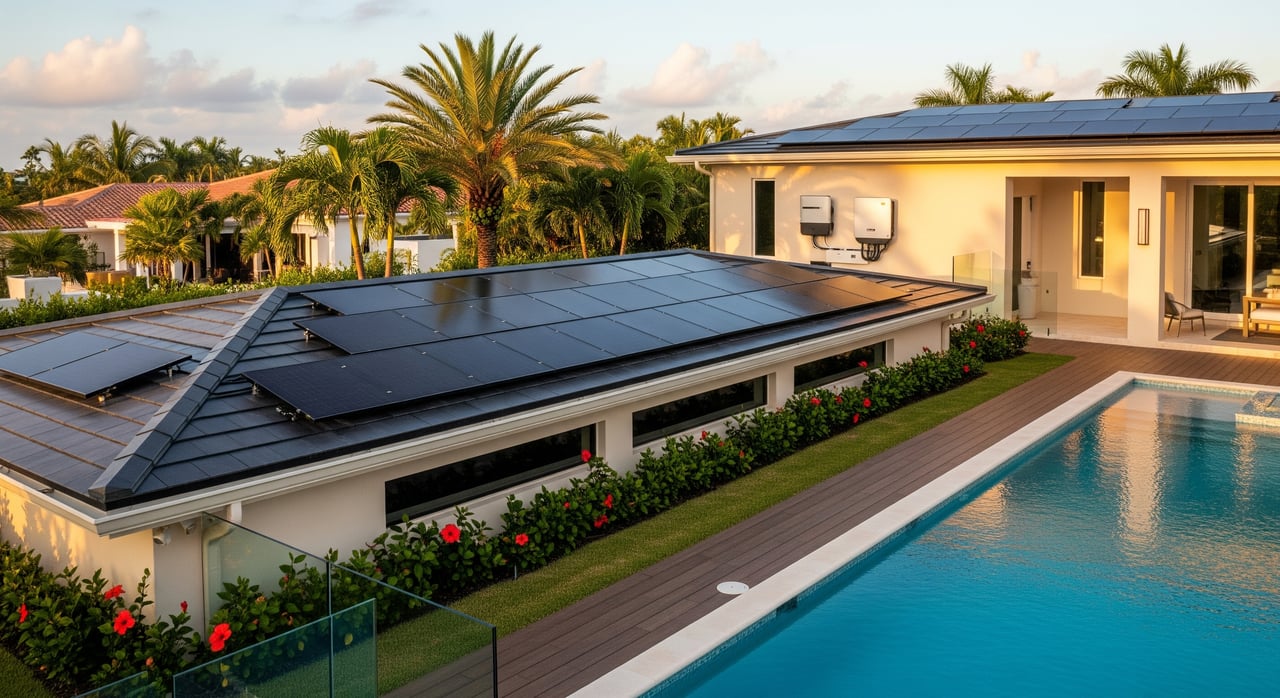
Thinking about adding solar to your Boca Raton home but unsure how FPL’s credits actually show up on your bill? You are not alone. Between export rates, HOA approvals, and hurricane‑rated hardware, there is a lot to clarify before you sign a contract. In this guide, you will learn how FPL net metering works, what the local interconnection and permitting steps look like, how Florida law treats HOAs, and how to keep your system beautiful without sacrificing performance. Let’s dive in.
FPL net metering basics in Boca
When your rooftop system produces more electricity than you use, the surplus flows to the grid and your meter records that export. FPL then applies a credit to your account. When you draw power later, you are billed for your net usage.
- Credit value: Utilities either credit exports at full retail or at a specific export rate known as net billing. Your savings depend on which approach FPL applies when your system goes live. Confirm the current export credit and tariff name on FPL’s official site before you size your system.
- Rollovers and true‑up: Many utilities roll unused credits month to month, then reconcile after 12 months. Ask FPL how unused credits are handled at your annual true‑up so you plan your system size and usage accordingly.
- Metering: After approval, FPL installs or programs a bi‑directional or interval meter that records both imports and exports. Your installer should verify the exact meter requirement with FPL’s interconnection team.
How credits show on your bill
Expect to see charges for energy you import and credits for energy you export. Unused credits typically roll forward within the billing year. Because utility programs evolve, it is smart to verify the current posting method and annual reconciliation on FPL’s customer generation pages.
Sizing and design strategy
If export credits are below full retail, you get more value when you use more of your solar production on site. Practical ways to increase self‑consumption include right‑sizing the array to your typical daytime loads and considering storage. Your installer can model how orientation or batteries may improve value based on FPL’s current export treatment.
Incentives to note
- Federal Investment Tax Credit: A 30 percent federal credit applies to eligible residential solar costs. Verify eligibility with your tax advisor for the year you install.
- Florida property tax treatment: Florida protects you from higher property taxes due to value added by residential renewable energy. See the policy details through the DSIRE Florida summary and confirm local implementation.
FPL interconnection: steps and timeline
Your installer usually manages the paperwork, but it helps to know the flow.
Step 1: Site assessment and proposal
A site visit evaluates roof condition, shading, and layout. You receive a design, production estimate, and one‑line electrical diagram with equipment specs.
Step 2: Local permit applications
Your installer files building and electrical permits with the City of Boca Raton or Palm Beach County, depending on jurisdiction. Submittals include structural details and wind‑load calculations.
Step 3: FPL interconnection application
Your installer submits FPL’s application with drawings, equipment data sheets, and any required insurance or agreements. Small residential systems may use a simplified path. Check current forms on FPL’s distributed generation pages.
Step 4: Inspections
After installation, the local building department inspects the work. FPL may also require proof of the passed inspection before granting Permission to Operate.
Step 5: Permission to Operate and meter setup
FPL issues Permission to Operate and installs or programs the correct meter. Your system can then be energized.
Typical timeline
- Proposal and contract: days to 2–3 weeks
- Permit review in Boca: 2–6 weeks
- FPL interconnection review: 2–8 weeks
- Final inspections and PTO: 1–4 weeks
Most Boca homeowners see 6–12 or more weeks from contract to PTO. Expect longer if your project needs a meter base upgrade, service panel work, or grid review.
Fees and standards
Budget for permit fees, potential FPL interconnection or meter fees, and any electrical upgrades your home needs. FPL requires code‑compliant, UL and IEEE‑listed equipment with anti‑islanding protections. Your installer should confirm the latest requirements with FPL.
Permitting in Boca Raton and Palm Beach County
First, confirm if your property is inside city limits or in unincorporated Palm Beach County.
- City of Boca Raton: Solar permits run through the City of Boca Raton Building Division. Plans must meet Florida Building Code requirements, including wind‑load and hurricane attachment standards.
- Palm Beach County: Properties outside the city use the Palm Beach County Building Division. Submittals are similar and must show wind‑rated attachments.
Older or nearing‑end‑of‑life roofs should be replaced before you install solar. Tile roofs are common and require specialized flashing and mounting. Ask your installer for a roof warranty on penetrations.
HOAs and your solar rights in Florida
Florida law protects your right to install solar. Associations cannot ban rooftop solar and may only apply reasonable conditions that do not materially increase cost or decrease efficiency. For a policy overview and state law links, review SEIA’s Florida overview and search the statute text on the Florida Legislature site.
What HOAs can usually request
- A complete application with drawings, product sheets, and proof of code compliance
- Reasonable placement, conduit routing, and color choices that do not reduce output meaningfully or add major cost
- Installer licensing and insurance and adherence to building code
What HOAs cannot do
- Ban rooftop solar outright
- Force placement that significantly reduces production without a code, safety, or structural reason
- Impose conditions that materially increase cost beyond reasonable standards
A smooth approval playbook
- Submit a clear packet prepared by your installer with site photos, array layout, attachment details, and equipment specs.
- Quantify performance trade‑offs for any requested changes so the ARC understands the impact on output and payback.
- Request written rulings that cite the association’s guidelines and applicable Florida law.
Aesthetics without performance compromise
You can keep a clean look and strong production.
- Panels: Choose black‑frame and black‑backsheet modules for a uniform profile. Keep arrays aligned with roof lines and spacing consistent.
- Racking: Low‑profile or rail‑less systems reduce visual bulk. If they add cost, include a simple note for your HOA that compares cost and performance.
- Conduit: Route inside attic spaces where possible and color‑match any visible exterior conduit.
- Inverters: Microinverters or optimizers on the roof reduce the need for a large wall‑mounted inverter. If you use a string inverter, place it in a discreet, ventilated area or add a tasteful screen that does not block airflow.
Costs, incentives, and value drivers
Actual costs depend on system size, roof type, equipment, and any electrical upgrades. Ask for multiple quotes from local installers experienced with Boca’s wind ratings and permitting. Use FPL’s current retail rates and export credit rules to model payback. Storage can improve self‑consumption and add resilience during outages. Battery systems have specific code and permit needs your installer should address.
For incentives and policy details, reference the DSIRE Florida summary and verify any current FPL program specifics on FPL’s official site.
Timeline at a glance
Plan for 2–4 months from contract to Permission to Operate in many cases. Build in extra time for HOA review, roof work, or specialty equipment. Your installer should provide a written schedule that reflects Boca or county permitting, FPL review windows, and meter availability.
Next steps
- Confirm your jurisdiction and HOA process.
- Ask two or three Florida‑experienced installers for designs that maximize on‑site use and meet Boca wind standards.
- Verify FPL’s current export credit and true‑up details before finalizing system size.
- Decide on any aesthetic upgrades early so you include them in your HOA submission and budget.
If you want a trusted advisor to oversee planning, permits, HOA coordination, and quality control as part of broader property stewardship, Stephanie Schwed offers construction advisory and renovation oversight tailored to luxury homes in Palm Beach County. Let’s connect to align your solar plan with your long‑term property goals.
FAQs
How does FPL net metering work for Boca homes?
- Your system exports surplus power, FPL records it, and you receive credits that offset future usage; confirm current export credit details on FPL’s official site.
What is the annual true‑up for FPL solar customers?
- Many programs roll credits month to month and reconcile annually, but treatment varies; ask FPL how unused credits are handled at true‑up each year.
How long does FPL interconnection take in Boca Raton?
- Most projects run 6–12 or more weeks from contract to PTO, including permit reviews, inspections, and utility approval.
Can my HOA stop me from installing rooftop solar in Florida?
- No; Florida law bars outright bans and allows only reasonable restrictions that do not materially increase cost or lower efficiency; see SEIA’s Florida overview and the Florida Legislature site.
Will I need a new meter or panel for solar with FPL?
- FPL typically installs or programs a bi‑directional meter, and some homes need service panel or meter base upgrades depending on system size.
Are there Florida incentives for residential solar?
- The federal ITC is 30 percent for eligible costs, and Florida offers favorable property tax treatment; verify specifics through the DSIRE Florida summary and with your tax advisor.