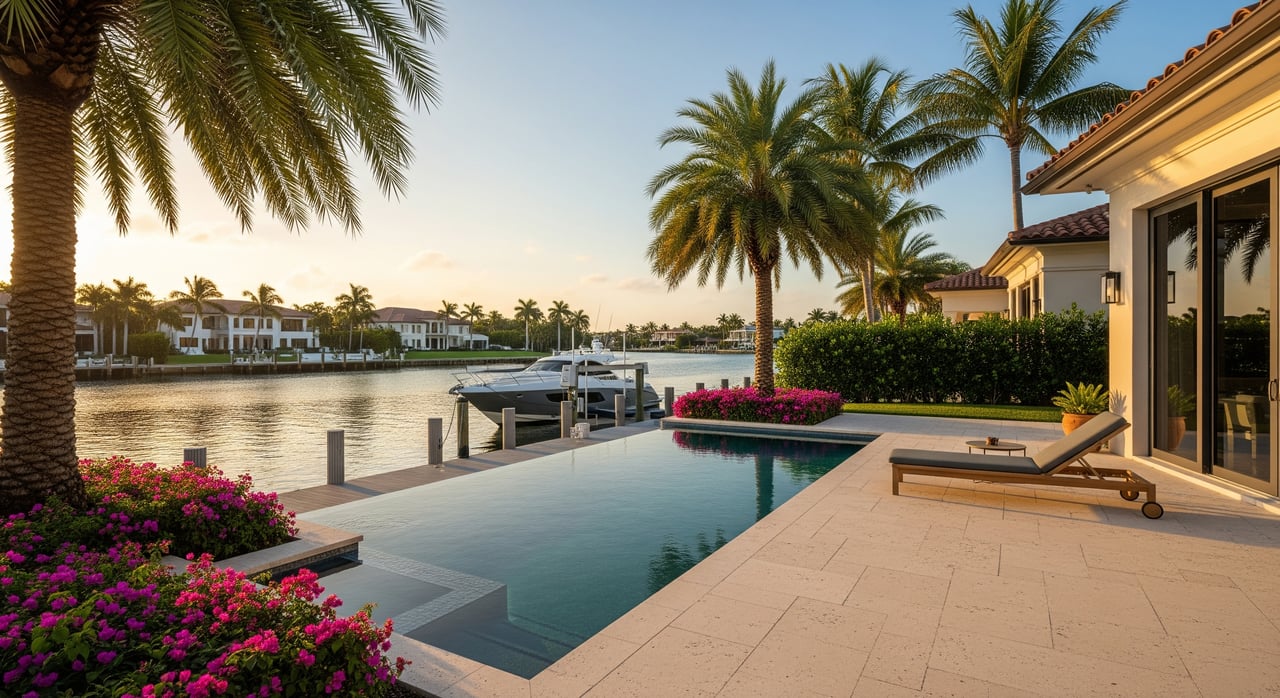
Is paying a premium for the water worth it in Palm Beach Gardens? If you are weighing views and boat access against lower insurance and maintenance, you are not alone. The waterfront vs. inland price gap is real, but the size of it depends on water type, access, condition, and risk. In this guide, you will learn what drives the gap, how to measure it correctly, and how to buy or sell with confidence. Let’s dive in.
What counts as waterfront here
Waterfront in Palm Beach Gardens typically means direct adjacency to a waterbody and practical access. That includes intracoastal frontage along the Lake Worth Lagoon and Intracoastal Waterway, navigable canals, lakes, and river frontage. Oceanfront is nearby in the county, but most Palm Beach Gardens inventory is intracoastal, canal, or lake.
Inland means property without direct water frontage. This includes homes in gated communities, golf course lots, and neighborhood streets set back from waterways.
Being precise matters. Buyers and sellers should distinguish between water adjacency with or without dock rights, navigability and depth, and whether views are open or partially obstructed.
Why waterfront and inland prices diverge
Several local factors create the gap between waterfront and inland homes.
- Scarcity and demand. Waterfront parcels are finite, and the buyer pool often includes second‑home owners, boaters, and luxury buyers. Scarcity supports a premium when demand runs high.
- Water type and access. Intracoastal frontage and wide, unobstructed views typically command higher prices than smaller lake or canal frontage. Navigable, deep‑water access suitable for larger boats raises value more than water adjacency without docking.
- Functional utility. A legal, usable dock with adequate depth and ingress to open water is a major value driver. Without that, the premium tends to shrink.
- Views and privacy. Wide water, long vistas, and generous setbacks increase value relative to homes with limited views or close neighbors.
- Lot and outdoor living. Larger lots, updated seawalls, pools, and well‑designed outdoor spaces amplify waterfront premiums.
- Construction and condition. Waterfront buyers often expect higher resilience, such as masonry construction, elevation, and impact windows. Updated systems and finishes support pricing power.
- Insurance and carrying costs. Flood and wind exposures increase premiums and deductibles, which can temper the headline price buyers are willing to pay.
- Maintenance and permitting. Seawalls, docks, and shoreline infrastructure require ongoing care. Permitting limits or aging structures can reduce effective value.
Water type and access: what matters most
In Palm Beach Gardens, intracoastal frontage tends to sit at the top of the local spectrum because it pairs views with boating convenience. Navigable canal frontage can also trade at a meaningful premium when depth and bridge clearance support larger vessels. Lake frontage varies by water quality, size, and whether a practical dock is allowed.
Two similar homes can diverge in price based on just a few details:
- Dock rights and depth. Larger boats need deeper channels and good ingress. If you have to time tides or cannot clear bridges, buyers may discount.
- View corridor. A wide basin or long canal line often commands more than a narrow or obstructed view.
- Shoreline condition. A newer, permitted seawall in good condition is a plus. Deferred maintenance can be a negotiation lever for buyers.
Insurance, flood zones, and risk
Flood zone designation affects required coverage and cost. Many waterfront parcels sit in higher risk zones that require flood insurance and come with higher wind exposure. The regional insurance market has been volatile, which means premiums, deductibles, and carrier availability can change and may reduce buyer willingness to pay at the margin.
Risk management translates directly into value. Buyers should review FEMA flood maps, request any recent elevation certificates, and obtain quotes for wind and flood coverage early in the process. Long‑term sea‑level and storm considerations are part of the county’s planning context, and more buyers are pricing that risk into their decisions.
If you are purchasing as a second home, remember that homestead caps do not apply to non‑primary residences, which can influence carrying costs relative to inland homes that may be owner‑occupied.
How to measure the price gap the right way
There is no one fixed premium that applies to every waterfront home in Palm Beach Gardens. The most reliable way to quantify the difference is to analyze recent local sales with consistent definitions and appropriate controls.
Here is a practical approach:
- Define clearly. Count a sale as waterfront only if the parcel directly fronts a waterbody and MLS or parcel records confirm the subtype, such as intracoastal, canal, or lake, plus any dock.
- Set a clean time window. Use the most recent 12 to 36 months to capture current conditions. If you want trends, expand the window but control for time.
- Start simple. Compare median sale price and price per square foot for waterfront vs. inland within Palm Beach Gardens. Then stratify by size, beds and baths, year built, and lot size to reduce mix bias.
- Use matched pairs. For each waterfront sale, pair it with the closest inland comparable by location, square footage, bed and bath count, and age. Compute the difference to isolate the waterfront effect.
- Run a hedonic model. A regression on price that controls for size, condition proxies, lot, age, pool, garage, HOA, and year, with a variable for waterfront and subtypes, can isolate the premium more rigorously.
- Stress test. Break out by water subtype, flood zone, and presence of a dock. Check whether the premium changes by price tier or home size.
Because certain subtypes have small sample sizes, especially at the top end, expect wide confidence intervals. Document assumptions, show the range, and avoid over‑generalizing from a handful of sales.
Buyer playbook: pay the right premium
If you are considering a waterfront purchase, focus on total value and risk rather than headline price.
- Due diligence checklist:
- Obtain a recent survey and confirm legal shoreline, dock rights, and ingress.
- Order a seawall and dock inspection with a structural specialist.
- Confirm flood zone status and request any elevation certificate.
- Obtain wind and flood insurance quotes before final negotiations.
- Review any HOA or community rules on docks, boat size, and short‑term rentals.
- Check for any FEMA map changes or Letters of Map Change in progress.
- Use negotiation levers:
- Price in the cost of seawall or dock repairs and future maintenance.
- Evaluate premiums and deductibles as part of total cost of ownership.
- Consider resilience features, such as impact windows or elevated systems, when comparing homes.
A thoughtful process helps you decide whether a given home’s access, view, and condition truly justify the premium over similar inland options.
Seller strategy: unlock your waterfront premium
If you own waterfront property, preparation is your edge.
- Prepare documentation. Have recent seawall and dock inspections, permits, and maintenance records ready. List upgrades and resilience features clearly.
- Lead with utility and lifestyle. Highlight permitted dock capacity, depth and clearance, ingress to open water, and unobstructed views.
- Be transparent. If shoreline infrastructure is aging, consider completing minor repairs or offering a credit. Buyers value clarity on real costs.
- Price with data. Use recent, subtype‑specific comps and a matched‑pairs approach to set pricing and anticipate appraisal questions.
Clear documentation and realistic positioning keep your premium intact during inspections and financing.
Inland opportunities worth a closer look
Inland homes in Palm Beach Gardens can deliver strong value, especially for buyers who prioritize space, newer construction, or lower carrying costs.
- Newer builds may offer current codes, impact glass, and energy efficiency.
- Insurance and maintenance costs are often lower than waterfront peers, which supports affordability at similar price points.
- Golf course or preserve views can deliver a compelling lifestyle without flood or seawall considerations.
For many buyers, the inland value proposition lets you invest more in interior finishes, outdoor living, and location convenience.
What this means for Palm Beach Gardens
In this market, the largest premiums tend to attach to intracoastal frontage with practical boat access and wide water views. Navigable canal frontage can command strong pricing when depth and bridge clearance support larger vessels. Lake frontage varies more by size, view, and allowed dock use.
During hot periods, waterfront pricing can remain firm even with smaller buyer pools because of scarcity. In slower stretches, the specialized nature of the buyer pool can lengthen market time. Inland inventory often moves with broader affordability and lifestyle trends.
The takeaway is simple. The price gap is real, but it is not one number. It is a range that depends on subtype, access, condition, and risk, all filtered through current insurance and financing realities.
Next steps
If you want a clear, data‑driven picture tailored to your goals, ask for a concise pricing brief that compares waterfront and inland options for your criteria or property. With a legal background and hands‑on construction advisory, our team can help you structure due diligence, coordinate inspections, and position your next move, including off‑market opportunities and property management for seasonal use. Ready to talk strategy that fits your lifestyle and risk profile? Connect with Stephanie Schwed.
FAQs
How much more do waterfront homes sell for in Palm Beach Gardens?
- It depends on water type, access, condition, and risk; a local MLS analysis that uses matched pairs or a hedonic model can produce a defensible range for your price point and subtype.
Do waterfront homes carry higher insurance costs in Palm Beach County?
- Yes, flood and coastal wind exposures typically increase premiums and deductibles; obtain quotes for wind and flood coverage early and factor them into total cost of ownership.
What should I inspect before buying a waterfront home in Palm Beach Gardens?
- Arrange a seawall and dock inspection, confirm flood zone and elevation data, validate dock rights and navigability, and review HOA rules along with insurance quotes.
Are waterfront homes a good long‑term investment in Palm Beach Gardens?
- Scarcity and lifestyle demand support value, but higher insurance, maintenance, and long‑term coastal risk should be priced in; your return depends on subtype, condition, and holding period.
Can I add or expand a dock on a Palm Beach Gardens waterfront lot?
- Dock permits and design limits vary by location and rules; verify feasibility, depth, and clearance with current permitting requirements before you price or write an offer.