Wondering which condo upgrades will actually pay off in West Palm Beach? Between HOA rules, hurricane concerns, and today’s buyer preferences, it can be hard to know where to invest. You want smart improvements that boost resale value, reduce hassle, and look polished without overbuilding for the building. This guide breaks down the updates that tend to deliver in our market, what to avoid, and how to navigate approvals, costs, and timing. Let’s dive in.
What drives ROI in West Palm Beach condos
Renovation payoff in West Palm Beach depends on more than finishes. Buyers here often want low-maintenance, turnkey spaces in desirable buildings near amenities. That puts a premium on modern, neutral updates that feel fresh and easy to care for.
Climate and insurance risk also shape value. Impact protection, solid balcony condition, and dependable cooling give buyers confidence. In many buildings, association rules and building condition set the ceiling on ROI. A midrange refresh in a great building often outperforms a lavish remodel in a property with deferred maintenance or special assessments.
Before planning work, review your condo documents and ask about building projects, reserve funding, and recent assessments. These factors matter to buyers and lenders regardless of what you do inside your unit.
Renovations that usually pay off
Kitchen refresh
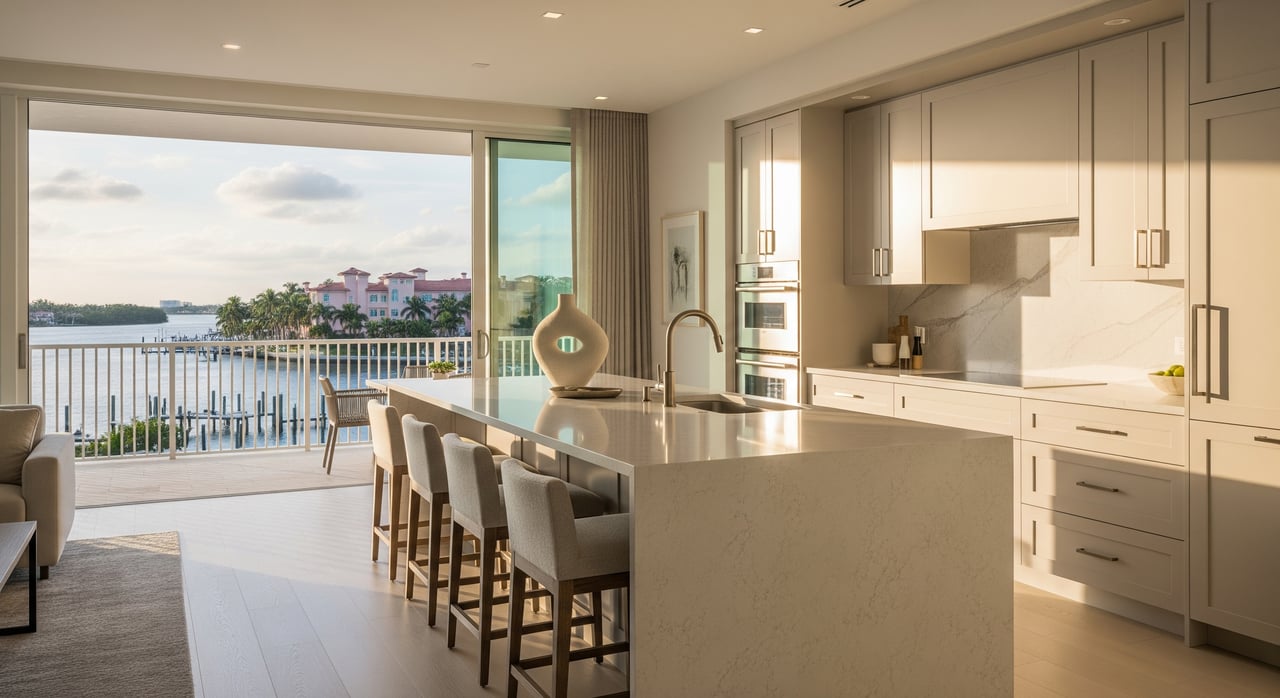
Kitchens sell condos. A focused refresh is often your best investment. Consider refacing cabinet doors, installing quartz or granite counters, adding a clean tile backsplash, swapping in midrange stainless appliances, and updating lighting and hardware. Keep finishes neutral and functional, and avoid over-customization that does not match the building’s price point.
Check for HOA and permit requirements if you plan to move plumbing, ventilation, or walls that could affect common systems.
Bathroom update
Updated bathrooms show well and feel hygienic. A new vanity with stone top, modern fixtures, bright LED lighting, fresh tile or luxury vinyl tile, and a reglazed or replaced tub or shower can elevate the space. Walk-in showers and other accessible features broaden appeal for aging-in-place buyers.
Verify permit needs for plumbing and venting, and confirm any HOA rules tied to stacks or shared systems.
Paint, lighting, and staging
A fresh coat of neutral paint and thoughtful lighting is a high-impact, low-cost win. Use warm, coastal-friendly neutrals, add dimmable LEDs, and replace dated fans. Pair this with simple staging to maximize light, space, and flow. These steps often deliver the strongest return per dollar.
Flooring
Continuous, moisture-resistant flooring modernizes a unit quickly. High-quality vinyl plank or tile performs well in our humid climate and is easy to maintain. Many associations require sound-dampening underlayment for hard-surface floors, so confirm specs to avoid noise complaints and compliance issues.
HVAC and water heater
Reliable, efficient cooling is essential in South Florida. If your system is old or underperforming, a high-efficiency replacement and routine service records can reassure buyers and reduce operating costs. Keep warranties and service documentation on hand. The same goes for a dated water heater.
Appliances and smart upgrades
Quiet, efficient appliances and a smart thermostat bring convenience and perceived quality. Choose clean-lined models that suit the building’s tier. Ultra high-end packages in entry-level communities rarely recoup cost.
Storage and built-ins
Condos live and sell better with smart storage. Closet systems, tasteful built-ins, and functional layouts help small spaces feel organized. Prefer modular or reversible solutions that future owners can change without heavy construction or permits.
Accessibility and universal design
Subtle accessibility features like wider entries where feasible, grab bars with designer looks, or a zero-threshold shower can broaden buyer appeal. Target non-structural improvements unless you are tailoring to a specific need and have HOA and permits in place.
Windows, doors, and hurricane protection
Impact-rated windows and doors can improve safety, comfort, and sometimes insurance outcomes. Payoff depends on your building’s rules and whether the association handles windows. If owner-level replacements are allowed, document product ratings, permits, and warranties for buyers.
Balcony and lanai condition
Balcony issues are a red flag for buyers and lenders. Structural components and waterproofing are commonly the HOA’s responsibility, while finishes may fall to the owner. If recent building repairs are complete, gather documentation. If you are handling finishes, choose durable, non-slip materials and keep permits and invoices.
Renovations to think twice about
- High-end reconfigurations that exceed what the building and neighborhood support.
- Removing walls or relocating major plumbing without a clear market payoff and proper approvals.
- Overly personal finishes or color schemes that narrow your buyer pool.
- Hardwood in buildings where buyers expect coastal-friendly, moisture-resistant flooring.
Costs, approvals, and insurance in Palm Beach County
Typical cost ranges
Every building and scope is different, but here are illustrative ranges to help with planning:
- Cosmetic refresh, paint, lighting, minor repairs: $2,000 to $8,000
- Midrange bathroom remodel: $8,000 to $30,000
- Kitchen refresh with counters, fronts, midrange appliances: $10,000 to $40,000
- Full higher-end kitchen: $40,000 to $100,000+
- Flooring installed, material dependent: roughly $5 to $12 per sq ft
- Impact-rated window and door replacement: varies widely by size and count, often several thousand to tens of thousands
- HVAC replacement: $3,000 to $15,000
High-rises can add costs for elevator protection, crane access, and HOA scheduling. Always get multiple local quotes before committing.
HOA approvals and permits
Most condos require written approvals, licensed and insured contractors, and compliance with work hours, elevator protection, and debris rules. Expect to provide insurance certificates and sometimes deposits for common-area protection.
Permits are typically required for plumbing, electrical, structural, and HVAC work. Unpermitted work can complicate appraisals, insurance, and closings. Verify requirements with the building department and your HOA before starting.
Insurance and disaster readiness
Understand what your master policy covers versus your individual HO6 policy. Impact-rated openings and other mitigation measures can affect windstorm exposure and may influence premiums. If you plan upgrades for insurance purposes, consult your carrier in advance and keep installation certifications and permits.
Building issues and reserves
Large repairs like roof, concrete restoration, balconies, parking structures, or pools can overshadow in-unit upgrades. Buyers will weigh reserve studies, recent meeting minutes, and special assessments heavily when valuing your condo.
Seller playbook before listing
- Prioritize high-visibility refreshes: paint, lighting, fans, hardware, and minor repairs.
- Update kitchens and baths with midrange, neutral materials if the unit looks dated.
- Service HVAC and water heater, then organize warranties and service records.
- Gather HOA documents, recent assessment and reserve information, and any permits for prior work.
- Stage the balcony or lanai to highlight indoor-outdoor living and natural light.
- Invest in professional photos that emphasize space, light, and clean lines.
Buyer plan after closing
- Start with paint, lighting, and quick comfort wins like a smart thermostat.
- Tackle flooring early to avoid moving furniture twice and to comply with underlayment rules.
- Refresh kitchen and bath surfaces for immediate impact.
- Service HVAC, check dryer vents, and confirm water heater age and condition.
- For bigger changes, plan ahead for HOA approvals, permits, and lead times.
Quick pre-renovation checklist
- Review condo declaration, bylaws, and house rules for what is allowed.
- Request recent reserve study, meeting minutes, and assessment history.
- Confirm whether windows and balconies are owner or HOA responsibility.
- Get written board approval for scope, work hours, and contractor access.
- Hire licensed, insured contractors and collect certificates of insurance.
- Verify permits and inspections required for plumbing, electrical, HVAC, and structural work.
- Build a 10 to 20 percent contingency for surprises and HOA-related costs.
- Keep all warranties, permits, and completion certificates for buyers.
Timing and presentation tips
Condos that are decluttered, lightly refreshed, and professionally photographed tend to sell faster. Simple staging that highlights storage, natural light, and balcony flow can make a clear difference. In this market, polish and documentation often matter as much as square footage.
Ready to make confident renovation decisions for your West Palm Beach condo and position your sale or purchase for success? If you want hands-on guidance with scope, approvals, contractor vetting, and resale strategy, connect with Stephanie Schwed. Stephanie’s construction advisory, renovation oversight, and property management support help you protect and grow your asset.
FAQs
What renovations add the most value in West Palm Beach condos?
- Midrange kitchen and bathroom refreshes, new flooring, fresh paint and lighting, and reliable HVAC typically deliver strong appeal without overcapitalizing.
Do I need HOA approval to replace flooring or remodel a bath?
- Often yes, especially for hard-surface flooring with required sound underlayment and for plumbing or electrical changes that usually need permits and written board approval.
Will impact windows pay off when I sell my condo?
- It depends on the building and buyer expectations, but documented impact-rated openings can boost buyer confidence and may help with insurability and comfort.
Who handles balcony repairs in a condo building?
- Structural components and waterproofing are commonly the HOA’s responsibility, while finishes or decking may be the unit owner’s duty per the condo documents.
How much should I budget for a kitchen refresh vs a full remodel?
- A refresh with new fronts, counters, and midrange appliances often runs $10,000 to $40,000, while a higher-end full remodel can exceed $40,000 to $100,000 depending on scope.
Can renovations affect my property taxes in Palm Beach County?
- Permitted improvements that increase assessed value can affect taxes, so confirm with the property appraiser’s guidance on reassessment rules and thresholds.